


FASTENER BUYING MADE SIMPLE:
IDENTIFYING THE RIGHT SELF-DRILLING SCREW FOR YOUR APPLICATION
This guide will help you understand the various Self-Drilling Screws that we carry, and their functions. The guide also contains information on the naming structure used for self-drilling screws to help you navigate the complex nomenclature used in their product descriptions.
Self-Drilling Screws are made with a unique tip style that is shaped like a drill bit. This bit style allows the screw to begin drilling its own hole before the threads engage, allowing you to skip drilling a pilot hole, and making installation a breeze. They are often referred to as “Drill Screws” or “Tek Screws.” They are sometimes referred to as “self-tapping,” but there is a difference.
The following factors are also helpful in choosing the proper self-drilling screws for your application.
CORROSION RESISTANCE & HARDNESS IN STAINLESS SELF-DRILLING SCREWS
410 Stainless Steel is the preferred grade of stainless when drilling into hard woods or metal surfaces. It offers solid corrosion resistance and also features the hardness required of a self-drilling screw, especially when drilling into metal materials.
18-8 Stainless Steel offers strong corrosion resistance but is a much softer grade of stainless steel and may encounter problems such as deformation or breaking when installed into hard woods or metal surfaces. Suitable for softer wood installations.
316 Stainless Steel is often referred to as “marine grade” stainless steel due to its superior resistance to corrosion, but like 18-8, it is a softer material which may not be able to penetrate hard woods or metal materials without deformation or breaking. Suitable for softer wood installations, particularly in wet environments.
POINT SIZE IN SELF-DRILLING SCREWS
Self-Drilling Screws come in 5 different point sizes, ranging from #1 to #5 with each successive size indicating a longer drill point tip. Point size is an important consideration that can impact its success based upon the thickness of the material into which it is being installed.
SELF-DRILLING SCREWS IN TWO DISTINCT THREAD STYLES
Self-Drilling screws in two distinct thread styles:
- Type BSD is the far more common style, featuring a coarser, spaced thread not intended to match up with a nut or matching threaded hole. These will be noted by a number (#2 through #14, #5/16 or #3/8) as their diameter size.
- Type CSD is less common and features threads that align with Unified Thread Standards (UTS), giving them the ability to be paired with UTS nuts. They can also be used without nuts when a finer thread option is required. Their diameters will be noted in UTS standard sizes (10-32 or ¼-20 for example).
BSD SELF-DRILLING SCREWS
Example of a BSD self-drilling screw description:
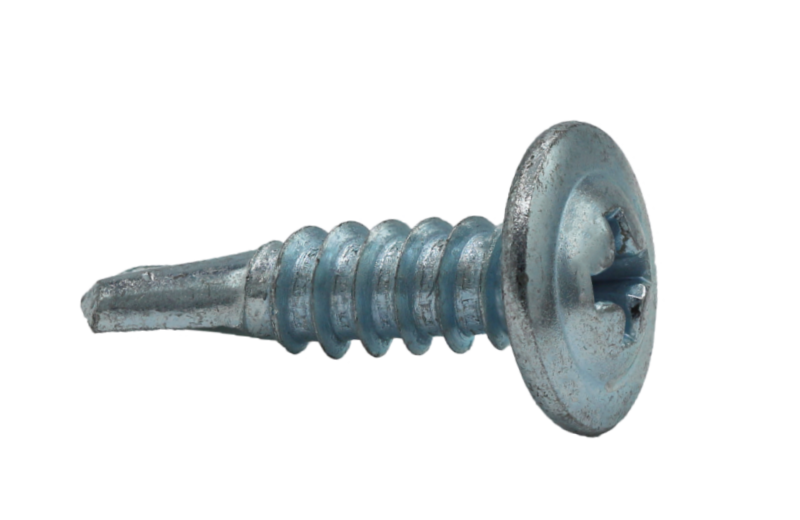
On this part, the “#8” indicates the diameter size (the lack of a thread count indicates that it does not have a CSD / UTS / Machine Screw Thread). The “1 3/8” indicates its length. It is driven by a phillips driver / bit, has a modified truss head, and is made out of steel with a zinc finish. The “#2 Drill Point” shows that it has the second shortest drill tip size on the 1-5 scale. Drill point lengths can be checked on the spec sheets you will find on the part’s page.
CSD SELF-DRILLING SCREWS
Example of a CSD self-drilling screw description:
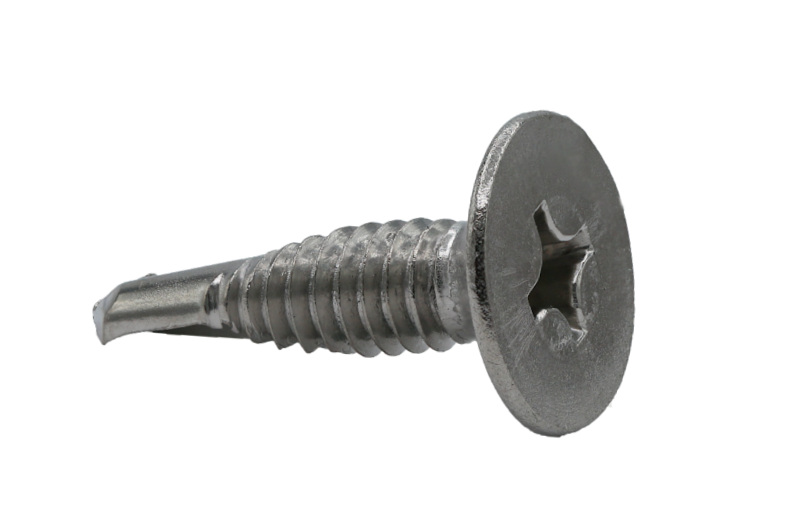
On this part, the “1/4-20” indicates the diameter size and thread count (the inclusion of a thread count shows that it does have a CSD / UTS / Machine Screw Thread). The “1” indicates its length. It is driven by a phillips driver / bit, has a wafer head, and is made out 18-8 stainless steel. The “#3 Drill Point” shows that it has the mid-sized drill tip size on the 1-5 scale. Drill point lengths can be checked on the spec sheets you will find on the part’s page. “Machine Screw Thread” is a secondary indicator that the part has CSD / UTS / Machine Screw Threads.
If you have additional questions about self-drilling screws, we’d love to be a resource for you. Contact us at [email protected], give us a call at (866) 688-2500 or use our live online chat in the upper right corner of this page!