FASTENER SUPERSTORE
PRODUCT GUIDE
All About Machine Screws
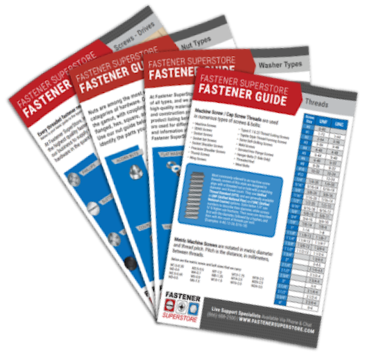
Machine Screws are screws designed with threads that align to Unified Thread Standards, either UNC (Unified National Coarse) or UNF (Unified National Fine).
They feature thread spacing and pitch that aligns with the nuts that they are made to be used with.
Their size is notated as “screw diameter size-thread count”.
For example, 4-40, 10-32, ¼-20, etc…. Metric machine screws are notated similarly, using “metric diameter-thread pitch”. Some examples are M4-0.7, M10-1.5 and M14-2.0.
Machine Screws are available in numerous head styles (flat head, hex washer head, pan head, truss head and many more).
Drive styles include phillips, square, torx® and many varieties of combo drives.
Materials include steel, several varieties of stainless steel and nylon.
Finishes include zinc, black oxide, zinc yellow and many more.
Start filtering through all of our machine screws here!
Steel Machine Screws
If you know you need a steel screw with a specific finish, try the filter options below.


Stainless Steel Machine Screws
If you need a stainless-steel option, start filtering with one of these options:
410 stainless steel is hardened and is the right choice if you’re installing screws into metal material.
18-8 stainless steel is a softer material and is generally the right choice for drilling into wood or plastics.
316 stainless steel is the most corrosion resistant grade of stainless steel that we offer and is good for wet environments.
Metric Machine Screws
For metric machine screws, use this filter:
Nylon Machine Screws
For nylon machine screws:

DID YOU KNOW?
Most commonly referred to as machine screw threads, screws of this style are designed to align with a threaded nut or hole with a matching diameter and thread count. They use Unified Thread Standard (UTS), and are generally available in UNC (Unified National Coarse) and UNF (Unified National Fine) options. Sizes below 1/4" use numbers to describe their diameter, while screws 1/4" and higher use fractions. Their sizes are described first with the diameter, followed by a hyphen, and then with the count of threads per inch. (Examples: 4-40, 12-24, 5/16-18)