


FASTENER BUYING MADE SIMPLE:
Identifying the Right Anchors for Your Application
This guide will help you understand the various Anchor Styles that we carry, and their functions. The guide also contains information on the naming structure used for these anchors to help you navigate the complex nomenclature used in their product descriptions.
Anchors are primarily used to mount items onto a wall or a permanent structure. In most cases these parts are inserted into a pre-drilled hole in the structure, providing a receiving hole for a screw to then be inserted, allowing for an anchored connection to be made.
PLASTIC ANCHORS
The following anchor styles are designed to be used in drywall, however in some cases they can be used in harder materials, and are considered light duty:
BANTAM PLUG CONICAL ANCHORS
A Bantam Plug Conical Anchor is an injection-molded anchor with a flanged opening at the top end and a cone-shaped body that is cupped at the opposite end. It has three horizontal slits cut into the body which extend from the bottom tip up the shank but stop before the flange. A light-duty part that can be used in drywall, concrete, hollow block, or brick. It is not suited for applications where holding power is important. For use with self-tapping or wood screws.
Example of a Bantam Plug Conical Anchor description:
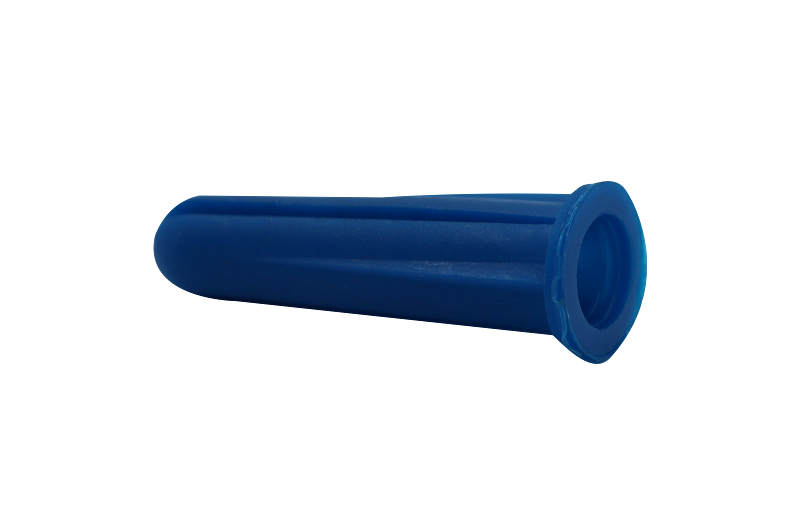
On this part, the “#10 - #12” indicates the range of screw sizes it is designed to accommodate. The “1” indicates its length. It is a Bantam plug-conical plastic anchor designed to expand inside a pre-drilled hole as a screw is inserted, creating a secure fastening point in materials such as drywall, concrete, brick, or masonry. It requires a 1/4” diameter drill hole for installation and is made out of nylon in a blue color.
TAPERED AND RIBBED ANCHOR
A Tapered and Ribbed Anchor is an injection-molded anchor with a ribbed shank which resists "backing out" after installation and longitudinal slits along the shaft which allows the anchor to expand when a screw is inserted. They can be used in sheetrock, plaster, brickwork, concrete, or tile. The design of the collar allows plastic anchors to also be used in hollow materials. For use with self-tapping or wood screws.
Example of a Tapered and Ribbed Anchor description:
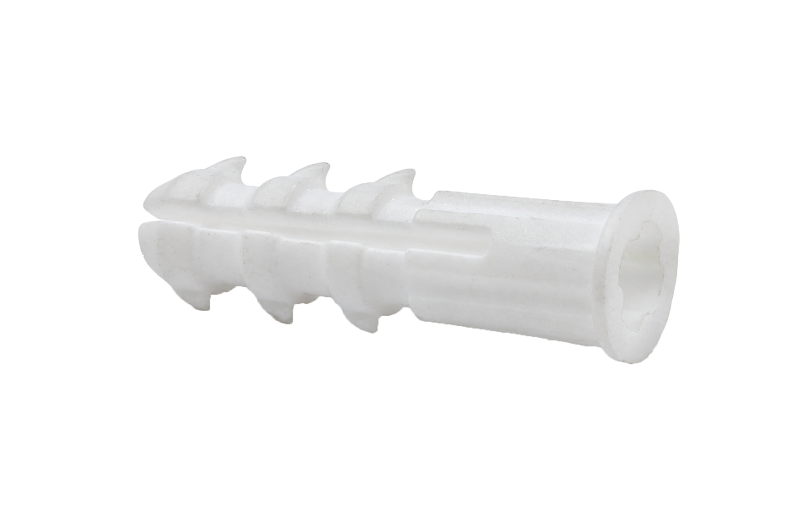
On this part, the “#8 - #10” indicates the range of screw sizes it is designed to accommodate. It is a tapered and ribbed plastic anchor designed to expand inside a pre-drilled hole as a screw is inserted, creating a secure fastening point in materials such as drywall, concrete, brick, or masonry. It features a tapered body with external ribs that help prevent rotation and improve grip during installation. It requires a 1/4” diameter drill hole for installation and is made out of nylon in a natural color.
FLUTED ANCHORS
A Fluted Anchor is an injection-molded anchor with protruding ribs that extend from end to end. The openings at either end of the anchor are identical. Can be used in stone, concrete, hollow block, or brick. It is not suitable for applications where holding power is important and should not be installed in overhead areas. For use with self-tapping or wood screws.
Example of a Fluted Anchor description:
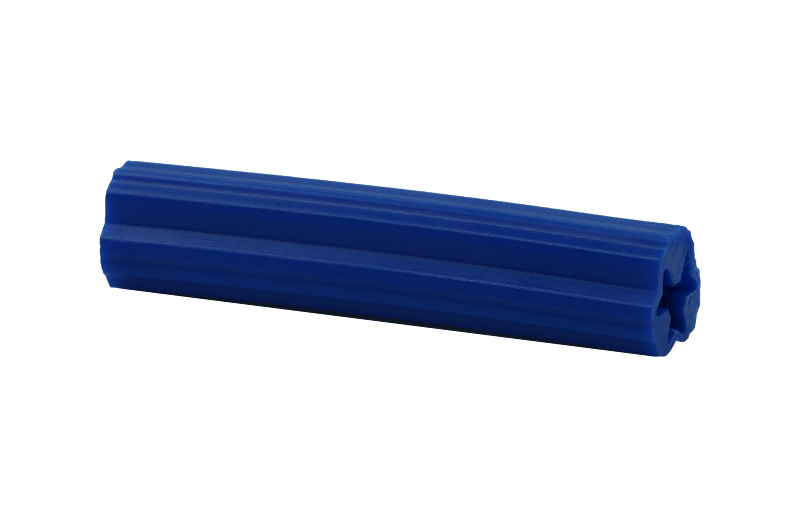
On this part, the “#14” indicates the nominal screw size it is designed to accommodate, while the “1 1/2” indicates the anchor's length. It is a fluted plastic anchor designed to expand inside a pre-drilled hole as a screw is inserted, creating a secure fastening point in materials such as concrete, brick, or masonry. It features a fluted body that helps prevent rotation and improves grip during installation. It requires a 5/16” diameter drill hole for installation and is made out of nylon with a plain finish.
WALLBOARD ANCHORS
Wallboard Anchors are available in nylon or zinc alloy. This anchor drills its own hole in, and works in any thickness of drywall, without tearing the paper coating. It can easily be backed out of its hole with a #2 screwdriver bit. It's designed for use in lightweight applications, such as curtain hardware, small pictures, and lightweight signs. It should not be used for overhead applications. The nylon variety is used when requiring a non-conductive anchor.
Example of a Wallboard Anchor description:
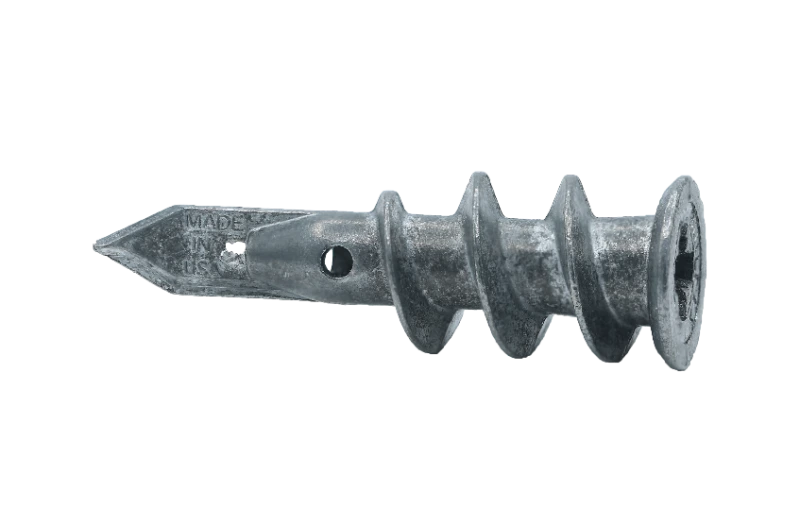
On this part, the “#8” indicates the nominal screw size it is designed to accommodate. It is a screw-in wallboard anchor designed to be installed directly into drywall, creating a secure fastening point without the need for a pre-drilled hole in typical applications. It features a threaded body that grips the drywall as it is screwed into place, helping resist pullout and rotation. Once installed, a #8 screw is driven into the center of the anchor to secure the attached item. It is made out of nylon with a plain finish.
HOLLOW WALL ANCHORS
Hollow Wall Anchors feature a design in which a cylindrical expanded shell with longitudinal sections of its shank removed allows the shell to be pulled toward the head and form anchoring legs on the blind side of the assembly when the pre-installed screw is tightened.
Example of a Hollow Wall Anchor description:
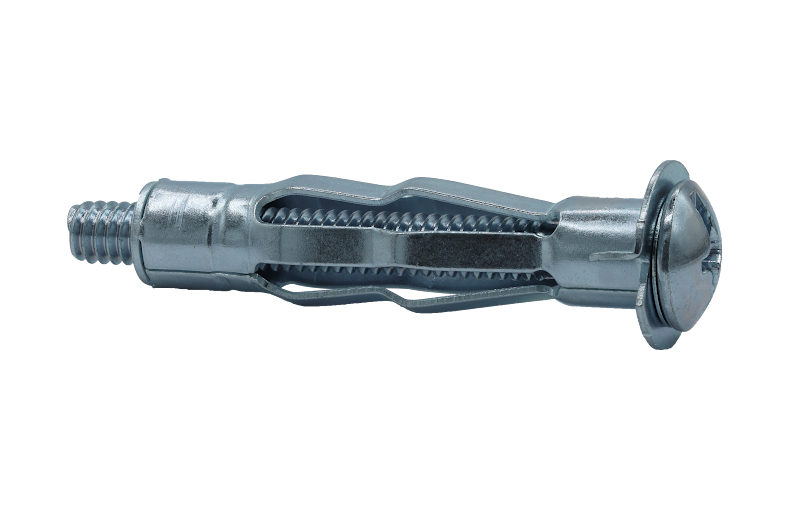
On this part, the “3/16” indicates the nominal anchor size. It is a standard hollow wall anchor with a short body, designed to secure objects to hollow walls such as drywall or plaster. The “10-24” indicates the screw thread size, meaning it uses a size 10 screw with 24 threads per inch. It requires a 3/8” diameter hole for installation. It features a metal sleeve that expands behind the wall as the screw is tightened, creating a secure fastening point by gripping the back of the wall material. It is made out of steel with a zinc finish.
PLASTIC TOGGLES
A Plastic Toggle is a one-piece, plastic anchor with a cylindrical body and four legs. The hole through the center of the body has ribs on the outside to hold the anchor in place during installation. As a tapping screw is driven through the body, it pulls in, expanding the legs and creating the anchoring hold.
Example of a Plastic Toggle description:
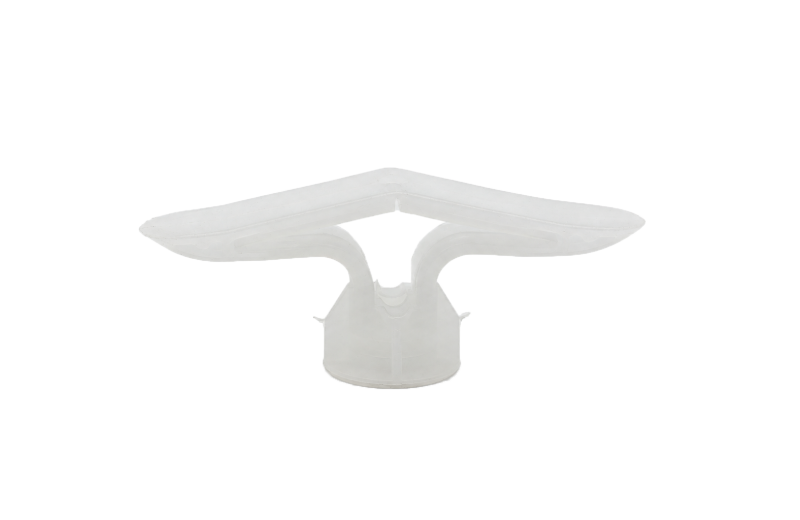
On this part, the “5/8” indicates the wall thickness it is designed to accommodate. It is a plastic toggle anchor designed to secure objects to hollow walls such as drywall. The “#6-#8” indicates the range of screw sizes it is designed to accommodate. It features a collapsible body that is inserted into a pre-drilled hole and expands behind the wall as a screw is tightened, creating a secure fastening point by distributing the load across the back of the wall material. It is made out of polypropylene with a plain finish.
TOGGLE BOLTS
Toggle Bolts feature: a fastening system consisting of (1) two matching steel "wings" each bent at two 90 degree angles, (2) an internally threaded nut with protrusions spaced 180 degrees apart which serves as a pivot attaching the two wings, (3) a wire spring providing the necessary tension to open and close the wings, and (4) a machine screw which mates with the nut. Light-duty anchors for use in hollow block or gypsum wallboard.
Example of a Toggle Bolt description:
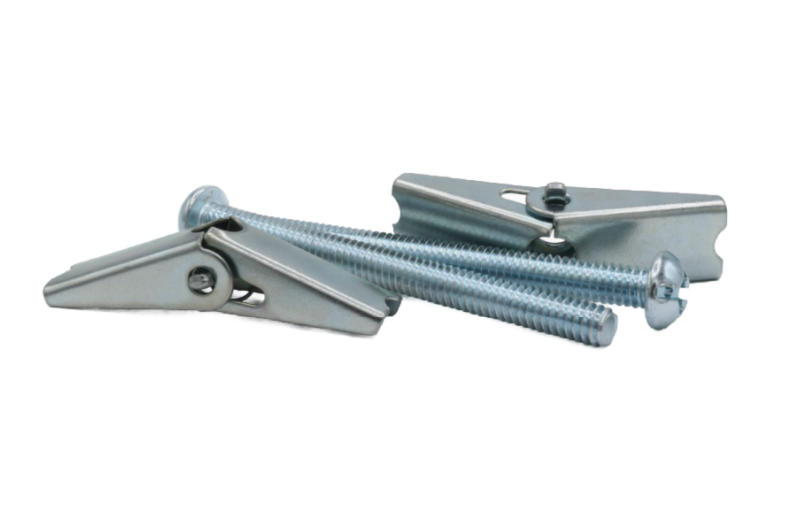
On this part, the “3/16” indicates the nominal toggle bolt size, while the “3” indicates its length. It is a toggle bolt designed to secure objects to hollow walls such as drywall or plaster. The “10-24” indicates the screw thread size, meaning it uses a size 10 screw with 24 threads per inch. It requires a 1/2” diameter hole for installation. It features spring-loaded wings that expand behind the wall to distribute the load over a wider surface area, creating a secure fastening point. The screw has a mushroom shaped head and is driven by a combination Phillips and slotted screwdriver. It is made out of steel with a zinc finish.
TOGGLE WINGS
Toggle Wings are a fastening system consisting of (1) two matching steel "wings" each bent at two 90-degree angles, (2) an internally threaded nut with protrusions spaced 180 degrees apart which serves as a pivot attaching the two wings, (3) a wire spring providing the necessary tension to open and close the wings. Used with a screw to create a toggle bolt anchor.
Example of a Toggle Wing description:
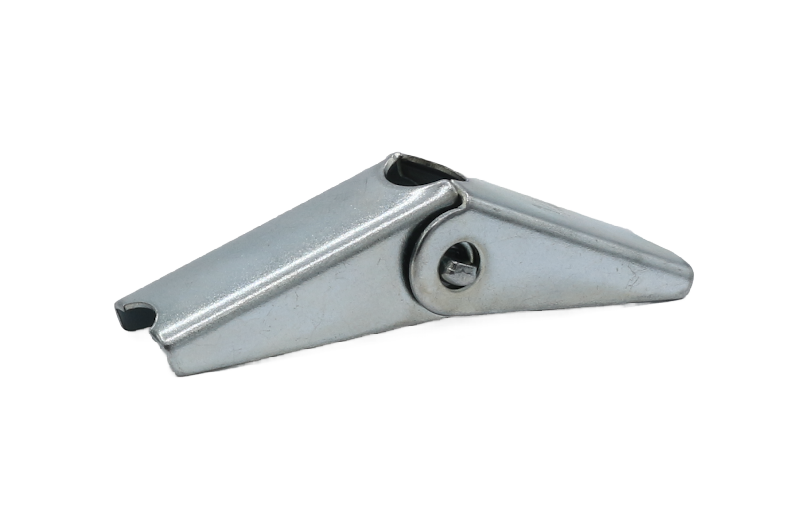
On this part, the “1/4-20” indicates the diameter size and the thread count. It is designed to accommodate a 1/4” diameter bolt with 20 threads per inch. It is a toggle wing anchor designed to secure objects to hollow walls such as drywall or plaster. It features spring-loaded wings that fold inward to pass through a pre-drilled hole and expand behind the wall to distribute the load over a wider surface area, creating a secure fastening point. The recommended hole size ranges from .62” to .75” in diameter. It is made out of steel with a zinc finish.
ANCHORS FOR BRICK & CONCRETE
The following anchor styles are designed to be used in concrete, brick, and other masonry materials. Pre-drilling is required for all of these anchor types:
CONCRETE SCREWS
Also found in our Screws section, Concrete Screws are designed for installation into concrete or masonry materials. Pre-drilling is required for installation.
Example of a Concrete Screw description:
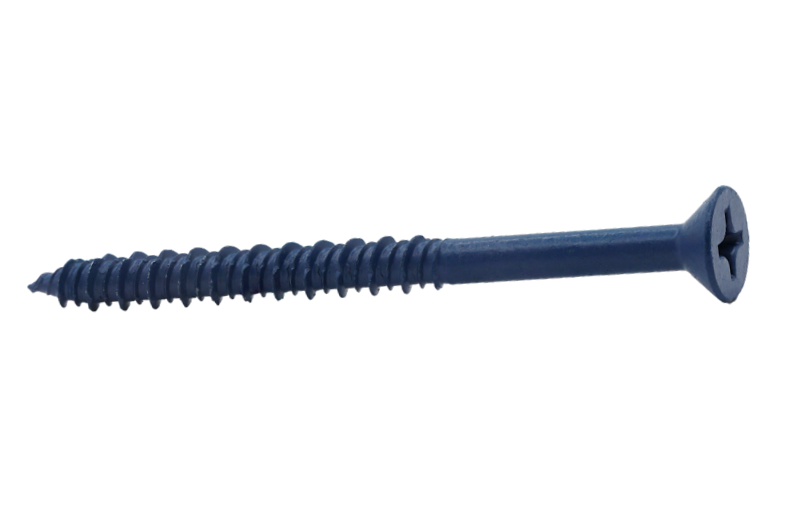
On this part, the “3/16” indicates the nominal diameter of the concrete screw, while the “1 1/4” indicates its length. It is a concrete screw designed to fasten materials directly into concrete, brick, or masonry using a pre-drilled pilot hole. It is driven by a Phillips bit, has a flat shaped head that sits flush with the material surface when countersunk, and features specialized threads designed to cut into masonry for a secure hold. It is made out of steel with a blue Perma-Seal finish.
LAG SCREW SHIELDS
Lag Screw Shields feature a two-piece assembly made of two semi-cylindrical hollow sections interlocked at the top, allowing the shield to expand when in place. Inserted into a pre-drilled hole in masonry materials, the anchor then expands when a lag screw is threaded into it, making for a stable placement of a post or brace.
Example of a Lag Screw Shield description:
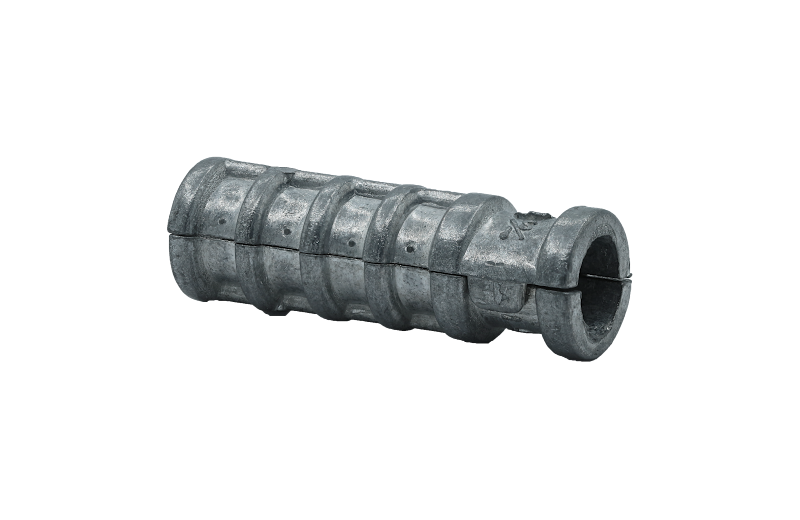
On this part, the “3/8” indicates the nominal lag screw diameter it is designed to accommodate. It is a long-style lag screw shield anchor designed to secure lag screws into concrete, brick, or masonry. It has a minimum anchor length of 2 1/2” and requires a 5/8” diameter hole drilled to a recommended depth of 2 1/2”. It features a ribbed, split-sleeve body that expands against the walls of the drilled hole as the lag screw is tightened, creating a secure fastening point. It is made out of die cast zinc with a plain finish.
DROP-IN ANCHORS
Drop-In Anchors are medium to heavy duty anchors installed flush into materials such as masonry or stone.
Example of a Drop-In Anchor description:
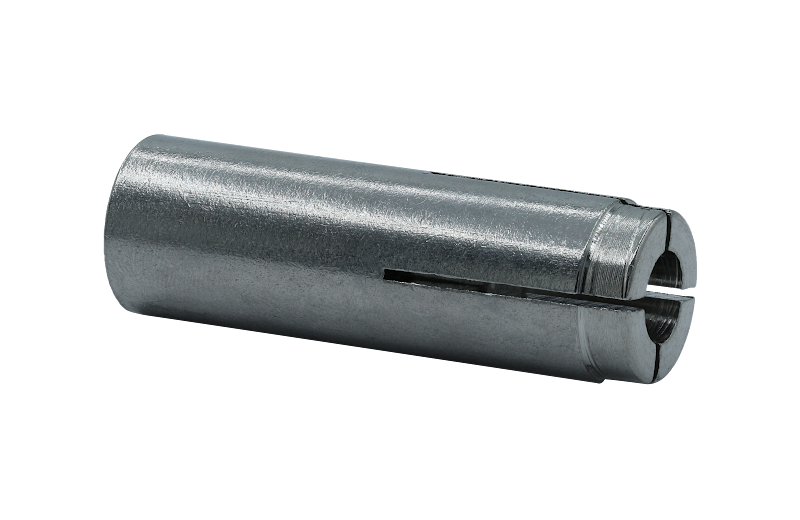
On this part, the “1/2-13” indicates the diameter size and the thread count. It is designed to accommodate a 1/2” diameter bolt with 13 threads per inch. It is a drop-in anchor designed to create a secure, internally threaded fastening point in solid concrete. It requires a 5/8” diameter drilled hole and has an internal thread length ranging from 3/4” to 1 3/16”, with a minimum embedment depth of 2”. It features a cylindrical body with an expansion mechanism that is activated using the included setting tool, causing the anchor to expand against the walls of the drilled hole. It is made out of stainless steel with a plain finish.
WEDGE ANCHORS
Made for heavy duty applications, Wedge Anchors offer greater shear strength than other expansion anchors. Used in concrete, masonry and other dense materials, wedge anchors include matching nuts and washers.
Example of a Wedge Anchor description:
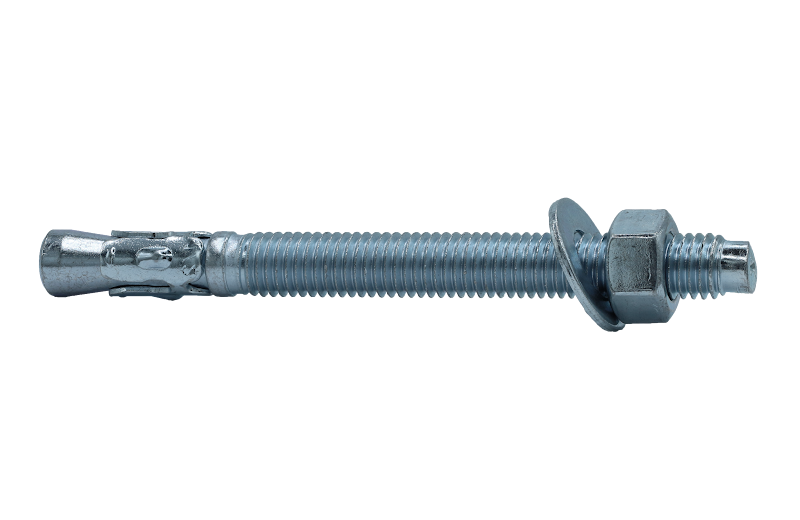
On this part, the “3/8-16” indicates the diameter size and the thread count. It has a 3/8” diameter with 16 threads per inch. The “3” indicates its length. It is a wedge anchor designed to secure materials to solid concrete. It features a threaded stud with an expansion clip at the base that wedges against the walls of a pre-drilled hole as the nut is tightened, creating a secure fastening point. It is made out of steel with a zinc finish.
EXPANSION PIN ANCHORS
Expansion Pin Anchors are an impact expansion style of anchor which creates its hold by expanding within the concrete material it is installed into when the exposed pin is hammered into place.
Example of an Expansion Pin Anchor description:
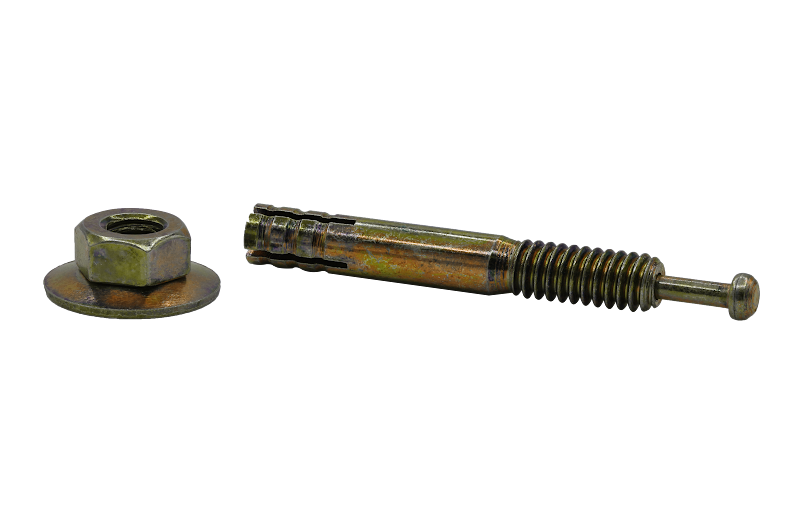
On this part, the “1/2” indicates the nominal diameter of the anchor, while the “2 3/4” indicates its length. It is an expansion pin anchor designed to secure materials to concrete or masonry. It features a cylindrical body with an internal expansion pin that is driven into the anchor during installation, causing the body to expand against the walls of a pre-drilled hole to create a secure fastening point. It is made out of steel with a zinc yellow finish.
HAMMER DRIVE ANCHORS
A Hammer Drive Anchor is a two-piece fastener consisting of a tubular stem with a dome or flat-fillister shaped head and a nail which is driven through the hollow center of the stem of the anchor. Intended for light duty, hammer drive anchors offer ease of installation and are tamper resistant.
Example of a Hammer Drive Anchor description:
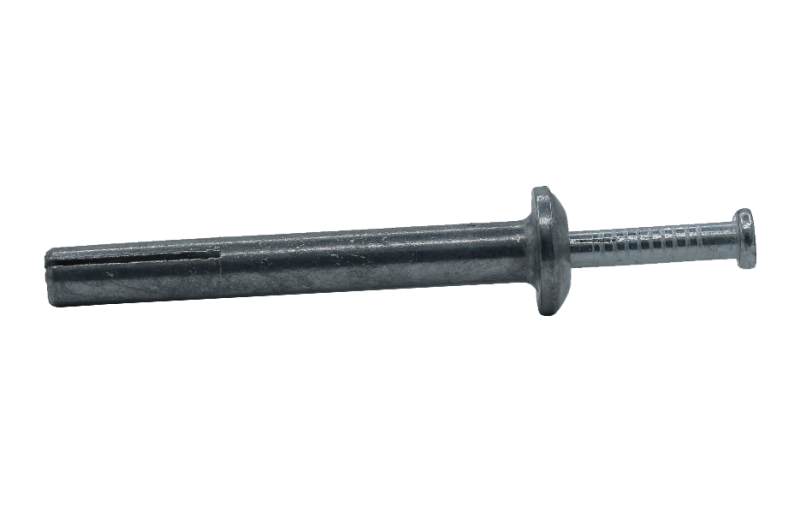
On this part, the “1/4” indicates the nominal diameter of the anchor, while the “2” indicates its length. It is a hammer drive anchor designed to secure materials to concrete, brick, or masonry. It features a mushroom shaped head and a Zamac alloy body that expands against the walls of a pre-drilled hole when the nail is driven into the anchor with a hammer, creating a secure fastening point. It is made out of Zamac alloy with a zinc-plated steel nail.
PLASTIC DRIVE PIN ANCHOR RIVETS
A Plastic Drive Pin Anchor Rivet is an anchor consisting of a two-piece nylon body with an expander pin pre-installed into its body and installed by hammering the pin into the body once placed into a pre-drilled hole.
Example of a Plastic Drive Pin Anchor Rivet description:
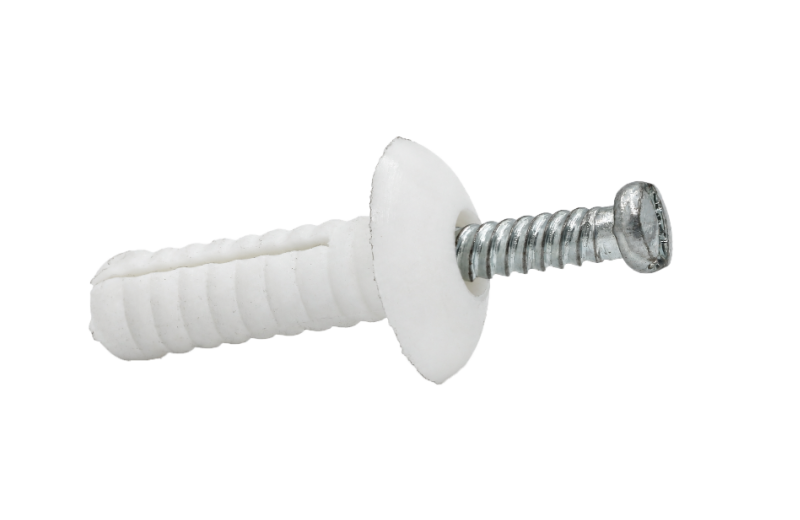
On this part, the “#10 (3/16)” indicates the nominal diameter of the anchor, while the “1” indicates its length. It is a plastic drive-pin anchor rivet designed to secure materials to concrete, brick, or masonry. It features a round shaped head and a nylon body that expands against the walls of a pre-drilled hole when the steel pin is driven into the anchor, creating a secure fastening point. It is made out of white nylon with a steel drive pin.
SLEEVE ANCHORS
Sleeve Anchors feature a hollow, cylindrical dilating sleeve assembled over a threaded stud (with optional head styles) and positioned against the minor diameter of a coned tip. Tightening the head of the stud pulls the cone end, expanding the body against the sides of the material into which it is being installed.
Example of a Sleeve Anchor description:
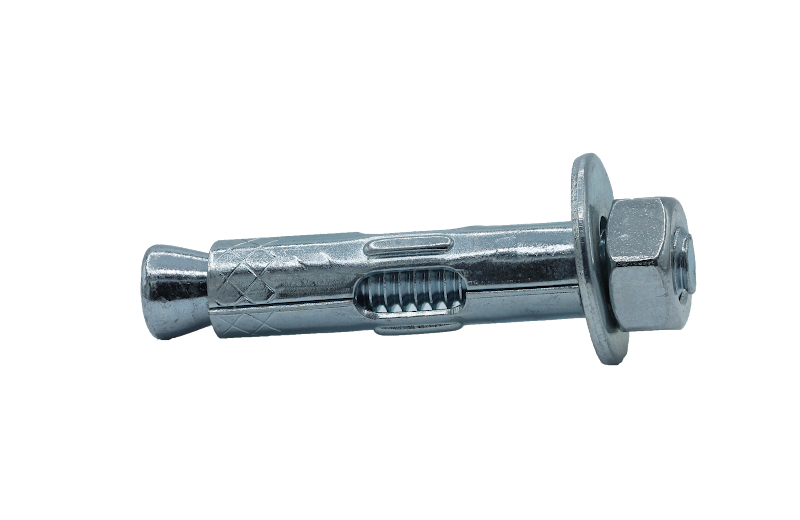
On this part, the “1/2” indicates the nominal diameter of the anchor, while the “4” indicates its length. It is a sleeve anchor designed to secure materials to concrete, brick, or masonry. It features a hex shaped head and an expansion sleeve that expands against the walls of a pre-drilled hole as the anchor is tightened, creating a secure fastening point. It is driven using a hex wrench or socket and is made out of steel with a zinc finish.
EXPANSION ANCHORS
An Expansion Anchor is an expanding style anchor used in soft masonry with machine screws or machine bolts which are exposed to vibration or side pressure. Available in single and double expansion styles.
Example of an Expansion Anchor description:
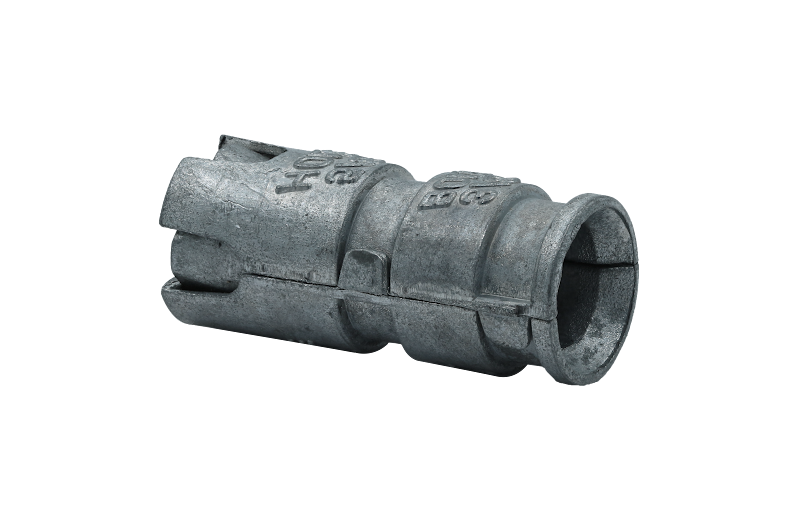
On this part, the “1/2” indicates the nominal bolt diameter it is designed to accommodate. It is a double expansion anchor designed to create a secure fastening point in concrete, brick, or masonry. It requires a 7/8” diameter drilled hole for installation. It features a cylindrical body with two expansion sections that expand outward as a bolt is tightened, gripping the surrounding material at both ends to create a secure hold. It is made out of zinc alloy with a plain finish.
LEAD WOOD SCREW ANCHORS
Lead Wood Screw Anchors are designed for light duty applications in brick, block, drywall, masonry or concrete and most commonly used with wood, lag or tapping screws. An expansion style anchor which features a hollow body with a split, allowing for expansion as the screw is tightened.
Example of a Lead Wood Screw Anchor description:
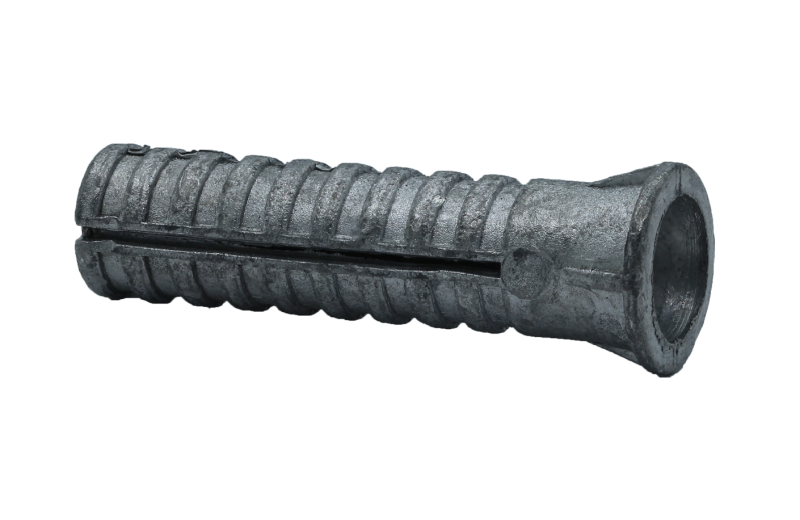
On this part, the “#10-#14” indicates the range of screw sizes it is designed to accommodate, while the “1 1/2” indicates the anchor's length. It is a lead wood screw anchor designed to secure wood screws into concrete, brick, or masonry. It has an outside diameter ranging from 5/16” to 3/8”. It features a cylindrical, ribbed body that expands against the walls of a pre-drilled hole as a screw is inserted, creating a secure fastening point. It is made out of lead alloy with a plain finish.
SPLIT DRIVE ANCHORS
Split Drive Anchors are a one-piece steel anchor with two sheared or "split" halves at the base which are pre-expanded to a specific size. Split drive anchors are available in flat head, pan and tie-wire head styles. A light-duty anchor for use with dead loads in concrete or stone.
Example of a Split Drive Anchor description:
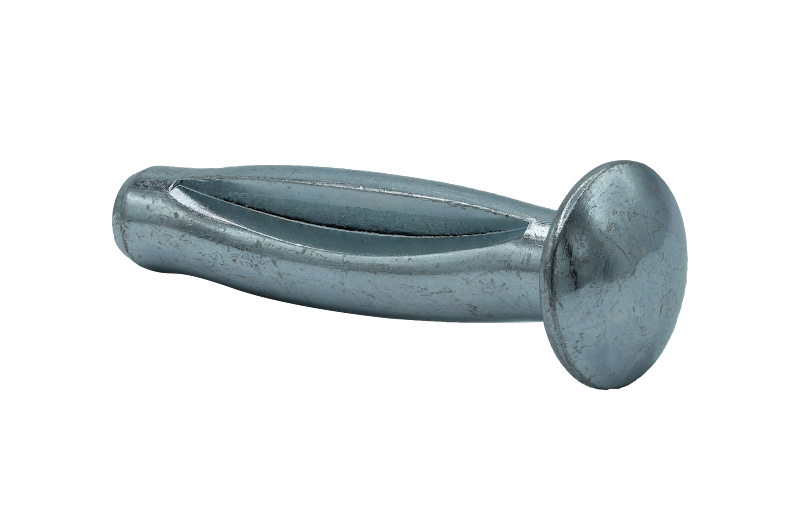
On this part, the “3/8” indicates the nominal diameter of the anchor, while the “2” indicates its length. It is a split drive anchor designed to secure materials to solid concrete. It features a round shaped head and a split shank that compresses during installation and exerts outward pressure against the walls of a pre-drilled hole, creating a secure fastening point. It requires a 7/16” fixture clearance hole and is installed by driving the anchor into place with a hammer. It is made out of high-grade heat-treated alloy steel with a zinc finish.
MACHINE SCREW ANCHORS
Machine Screw Anchors are made of zinc alloy with a lead external sleeve. The soft outer material allows these anchors to fill uneven or irregular spots in pre-drilled holes in brick, concrete, or stone. The anchor is tapped into place creating a tight hold. A machine screw can then be installed.
Example of a Machine Screw Anchor description:
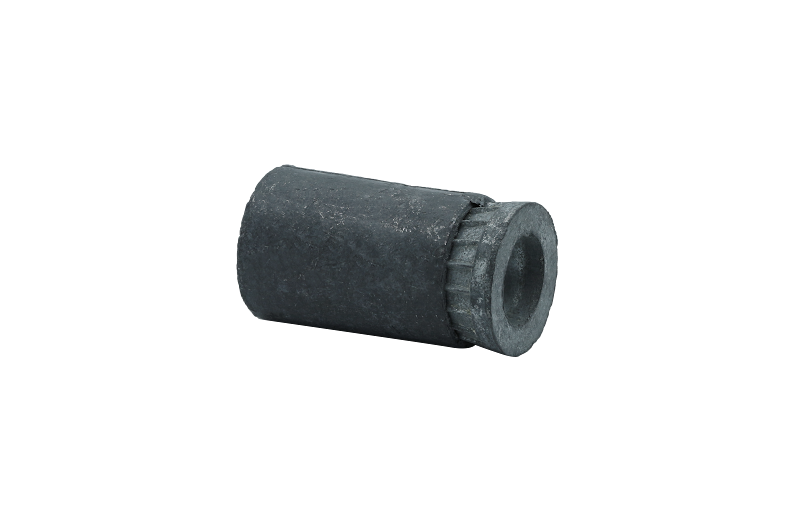
On this part, the “5/16-18” indicates the diameter size and the thread count. It is designed to accommodate a 5/16” diameter machine screw with 18 threads per inch. It is a machine screw anchor designed to create a secure, internally threaded fastening point in concrete, brick, or masonry. It requires a 5/8” diameter drilled hole and has a minimum embedment depth of 1”. It features a zinc internal expander and a lead external sleeve that expands against the walls of the drilled hole when the anchor is set, creating a secure hold.
ADDITIONAL ANCHORS
CABLE TIES
Nylon ties also known as zip ties, Cable Ties can be purchased in bulk or packaged quantities. We carry nylon natural (white) and UV black cable ties. Our UV black line resists degradation when used outdoors, while our natural white line is perfect for indoor applications. We carry lengths from 4" up to 36" in a variety of tensile strengths.
Example of a Cable Tie description:
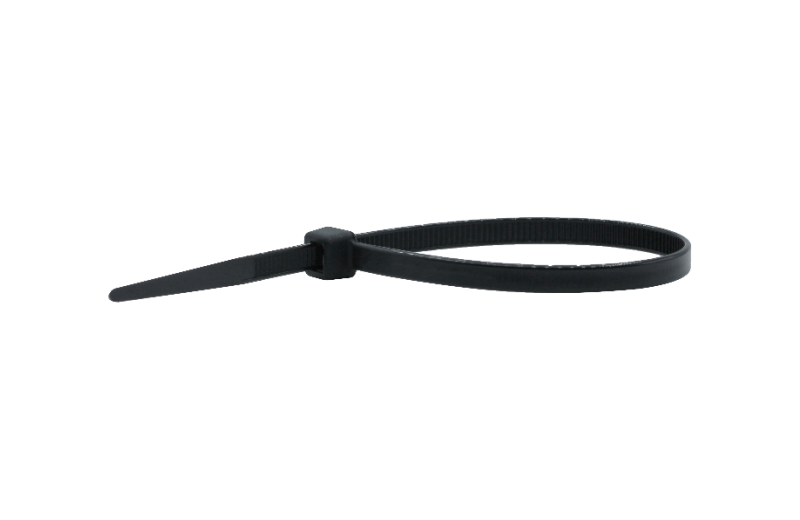
On this part, the “24” indicates the length of the cable tie in inches, while the “175 lb” indicates its tensile strength, or the maximum pulling force it is rated to withstand before breaking. It is a nylon cable tie designed to bundle and secure cables, wires, and other materials. It features a flexible, serrated strap with a self-locking head that allows it to tighten securely around objects and resist loosening. It is made out of nylon in a UV-resistant black color and is sold in bulk.
T ANCHORS
T Anchors are made of steel with a zinc yellow finish and come with a matching nut and washer. Used in ceilings, hollow walls, steel, concrete or wood, t anchor applications include overhead doors, light fixtures, shelf brackets, and television mounting hardware.
Example of a T Anchor description:
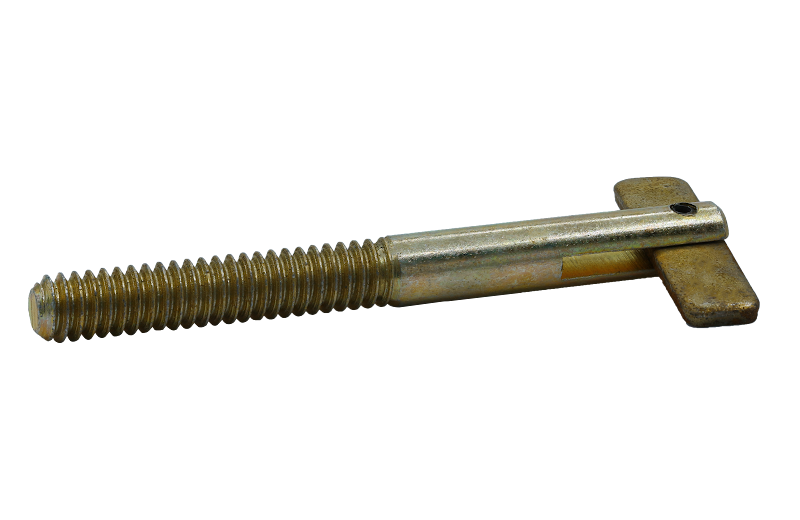
On this part, the “1/4” indicates the nominal diameter of the anchor, while the “2 1/2” indicates its length. It is a T-anchor designed to secure materials to concrete or masonry. It requires a 1/4” diameter drilled hole and has a grip range of 1” to 1 3/4”, indicating the range of material thicknesses it can accommodate. It features an expansion mechanism that grips the walls of the drilled hole as the nut is tightened, creating a secure fastening point. It is made out of steel with a zinc yellow finish and includes a nut and washer.
If you have additional questions about any of these anchor styles, we’d love to be a resource for you. Contact us at [email protected], give us a call at (866) 688-2500 or use our live online chat in the upper right corner of this page!