


FASTENER BUYING MADE SIMPLE:
Identifying the Right Locknuts in Unified Thread Standard (UTS) for Your Application
This guide will help you understand the various Hex Nuts in Unified Thread Standard (UTS) that we carry, and their functions. The guide also contains information on the naming structure used for hex nuts to help you navigate the complex nomenclature used in their product descriptions.
What is Unified Thread Standard (UTS)?
Unified Thread Standard (UTS) is the established standard for matching / mating fastener threads in the US and Canada, ensuring compatibility and consistency across applications. It is primarily used for certain types of screws, nuts, and bolts, providing diameter size and thread count guidelines to guarantee that these parts will work together properly.
UTS makes a further distinction between coarse threads – Unified National Coarse (UNC), and fine threads - Unified National Fine (UNF). Depending upon the job, you will need to consistently use one or the other for matching sets of threads.
See Unified Thread Standard chart for common UNC and UNF sizes (diameter / thread count).
Locknuts in Unified Thread Standard (UTS)
Locknuts are nuts with additional features to provide a stronger hold and resist loosening.
The following types of nuts fall under the category of locknuts:
Conduit Locknuts
Conduit Locknuts are commonly used in electrical boxes where cable connections are made. They feature minimal surface area and integrally formed lobes rather than an outer hex to allow for hand tightening.
Example of a Conduit Locknut description:
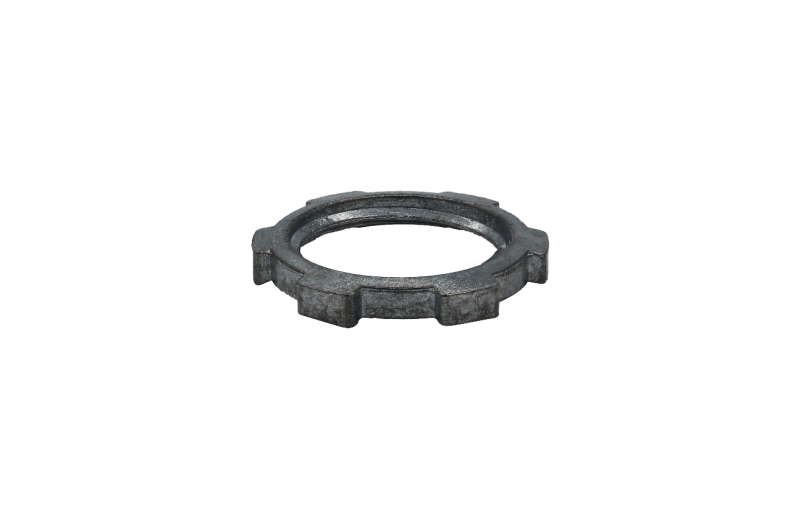
On this part, the “3/4-14” indicates the nominal conduit size and the thread count. It is designed for 3/4” nominal conduit threads with 14 threads per inch. It is tightened using a locknut wrench or pliers, has a thin, round body with external teeth for gripping, and is made out of steel with a zinc finish.
Double Serrated Locknuts
Double Serrated Locknuts are technically a hex nut, but with serrations on both sides of the head which allow for displacement of material on the mounting surface, creating effective resistance to vibrational loosening.
Example of a Double Serrated Locknut description:
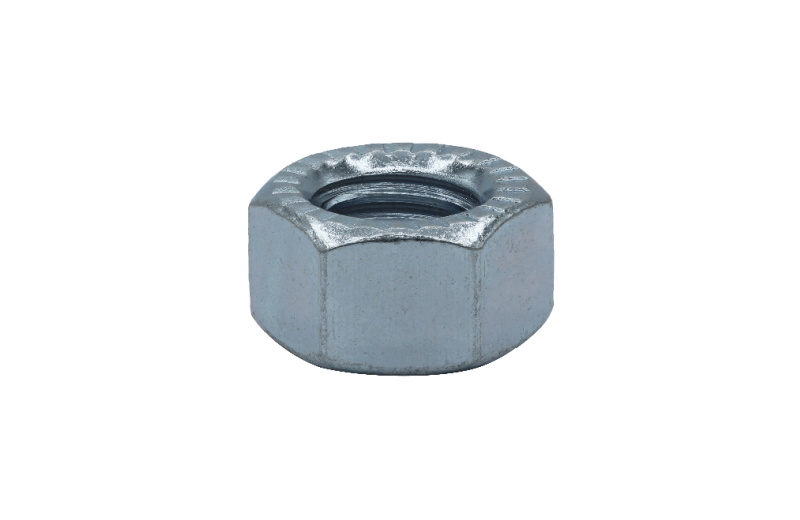
On this part, the “1/4-20” indicates the diameter size and the thread count. It has a 1/4” nominal thread diameter with 20 threads per inch. The 7/16” indicates the width across flats, while the 3/16” indicates its thickness. It is tightened using a hex wrench, has a hex shaped body with serrations on both bearing surfaces to resist loosening, and is made out of steel with a zinc finish.
Flex Locknuts
A Flex Locknut is also technically a hex nut but featuring a slotted round collar at the back end that expands, or flexes, as the inserted bolt threads through it, creating a locking hold.
Example of a Flex Locknut description:
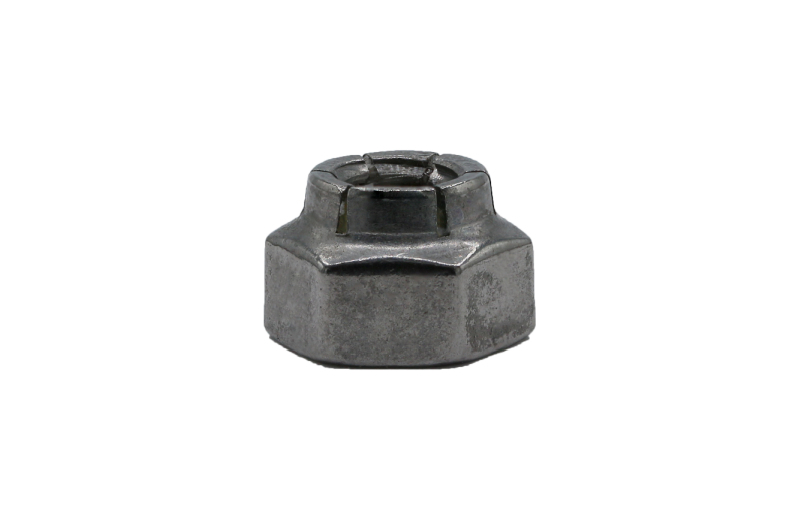
On this part, the “5/8-11” indicates the diameter size and the thread count. It has a 5/8” nominal thread diameter with 11 threads per inch. It is tightened using a hex wrench, has a thin hex shaped body with a flexible locking feature to resist loosening, and is made out of steel with a cadmium finish.
Hex Flange Nuts
Hex Flange Nuts are hex nuts with an enlarged circular washer base flaring out from the bottom of the nut. In most cases, serrations under this washer base displace material on the mating surface when installed, creating a strong hold that resists loosening. Some options are also available without serrations.
Example of a Hex Flange Nut description:
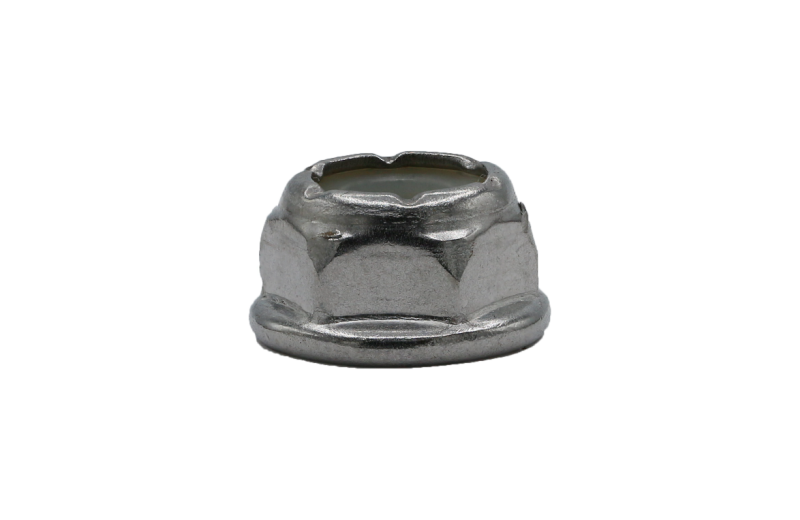
On this part, the “6-32” indicates the diameter size and the thread count. It has a size 6 nominal thread diameter with 32 threads per inch. It is tightened using a hex wrench, has a hex shaped body with an integrated serrated flange to resist loosening, and is made out of steel with a black oxide finish.
Keps Nuts
The most popular type of locknut because of its versatility, cost, and ease of installation, they consist of hex nuts pre-assembled with an attached, free-spinning washer (either an external lockwasher or conical washer) manufactured into one side.
Example of a Keps Nut description:
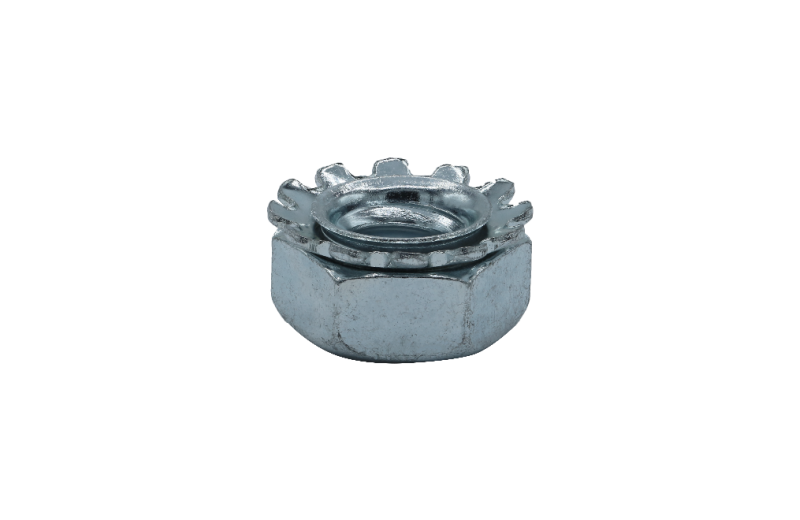
On this part, the “6-32” indicates the diameter size and the thread count. It has a size 6 nominal thread diameter with 32 threads per inch. It is tightened using a hex wrench, has a hex shaped body with an attached free-spinning external tooth lock washer to resist loosening, and is made out of steel with a zinc finish.
Nylon Insert Locknuts
A hex nut with a ring of nylon material inside of a collar at the top of the nut. When a screw reaches the collar, the threads and nylon form a tight, frictional fit, restricting movement of the screw when it is subjected to vibration.
Example of a Nylon Insert Locknut description:
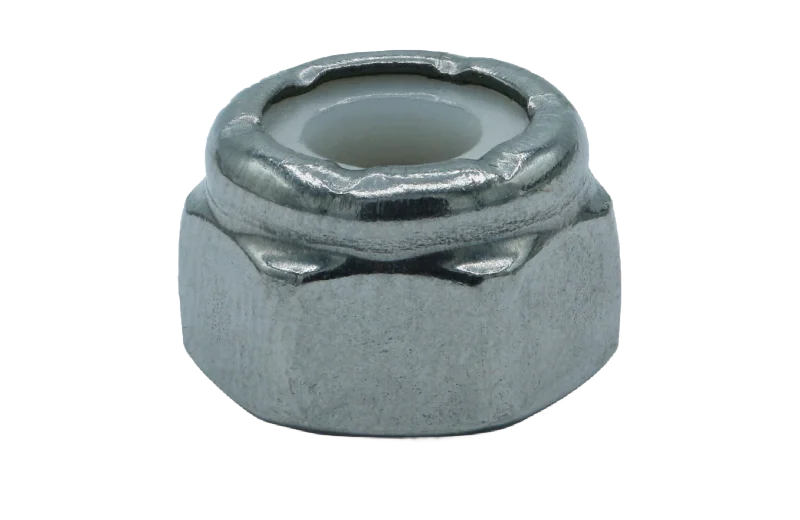
On this part, the “7/16-14” indicates the diameter size and the thread count. It has a 7/16” nominal thread diameter with 14 threads per inch. It is tightened using a hex wrench, has a standard light hex shaped body with a nylon insert to resist loosening, and is made out of Grade 8 steel with a zinc yellow finish.
Stover Locknuts
All metal one-piece locknuts. Bolt installation causes a controlled distortion of the top threads in order to create a strong hold.
Example of a Stover Locknut description:
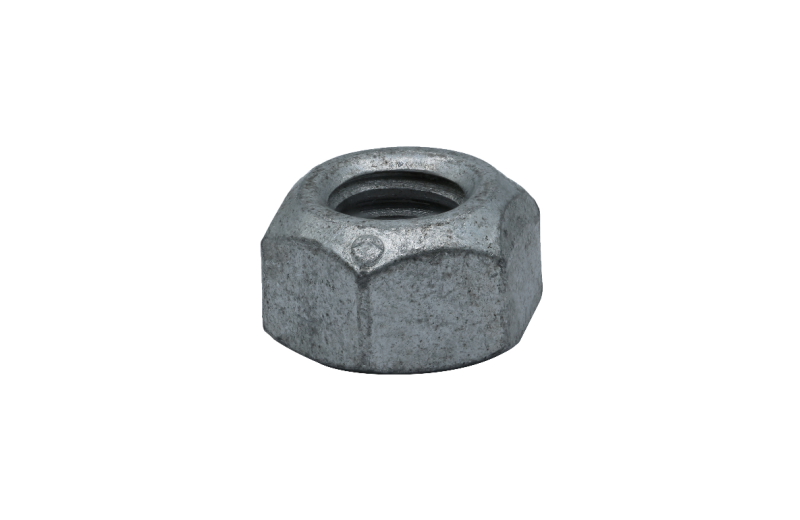
On this part, the “3/8-24” indicates the diameter size and the thread count. It has a 3/8” nominal thread diameter with 24 threads per inch. It is tightened using a hex wrench, has a non-flanged hex shaped body with a deformed-thread locking feature to resist loosening, and is made out of Grade C steel with a cadmium finish.
Two Way Reversible Locknuts
Hex nut containing two to three indentions compressed onto the flat sides of the nut, causing a distortion in the center threads, creating a locking action when tightened. Available in a variety of styles including thin and flanged.
Example of a Two-Way Reversible Locknut description:
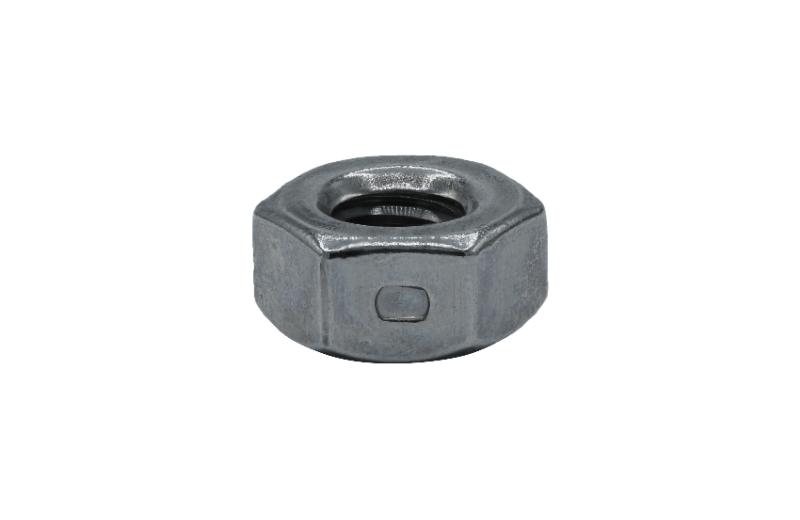
On this part, the “3/8-16” indicates the diameter size and the thread count. It has a 3/8” nominal thread diameter with 16 threads per inch. It is tightened using a hex wrench, has a hex shaped body with a two-way reversible locking feature that resists loosening when installed from either side, and is made out of steel with a zinc finish.
If you have additional questions about UTS locknuts, we’d love to be a resource for you. Contact us at [email protected], give us a call at (866) 688-2500 or use our live online chat in the upper right corner of this page!