

What Are Self-Tapping Screws and How Do They Work?
July 03, 2026
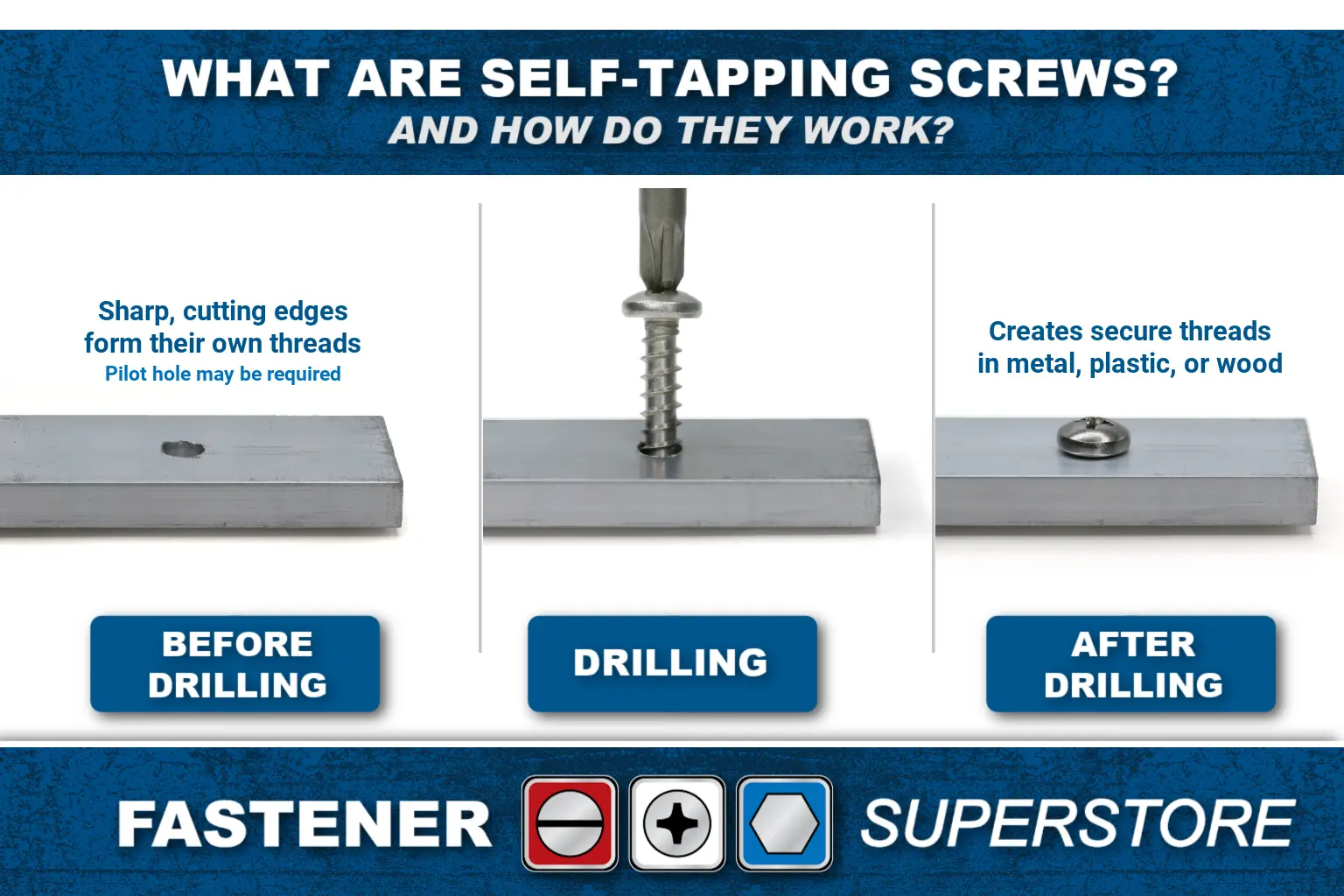
If you've ever tried to attach metal to metal without a pre-tapped hole and wondered how on earth that's supposed to work, self-tapping screws are your answer. These clever little fasteners are one of the most useful tools in any construction project, DIY kit, or manufacturing line. Instead of needing a pre-threaded hole to grip into, they create their own threads as they go.
Once you understand how they work and which type to reach for, they make a lot of jobs significantly faster and easier.
What Are Self-Tapping Screws?
Self-tapping screws are fasteners designed to tap their own threads directly into a material as they're driven in. Self-drilling screws feature unique, drill bit-shaped tips that drill the hole as the screw is driven into the material.
These screws work across a surprisingly wide range of materials, including metal, hard plastics, plastic housings, softer woods, and even some composite materials. They come in a huge variety of head styles, thread types, and sizes, so there's almost always a version built for whatever you're working with.
The key thing that sets them apart from standard screws is that they don't require pre-drilled holes with pre-cut threads to function.
How Do Self-Tapping Screws Work?
The pointed tip bites into the surface first, and then the threads follow right behind it, carving or pushing their way in as you drive. Your drill provides the torque, and the screw does the rest on its own.
Common Applications of Self-Tapping Screws
Self-tapping screws are commonly used in HVAC, sheet metal work, automotive, construction, and electronics. You can attach metal panels fast without needing access to the back side at all. Roofing crews use them to lock metal roofing panels down to the underlying structure, and they seal up tight without a lot of fuss.
Automotive assembly lines use them to secure plastic components and housings, where manually cutting threads would slow everything down. In electronics, self-tapping screws make assembling plastic components inside enclosures clean and efficient.
They're also a staple for everyday DIY projects around the house. Hanging brackets, securing electrical boxes, building small wooden structures, fixing metal fencing — these are all jobs where self-tapping screws make the work go faster and cleaner than most other fastener options. They're especially handy when drilling a pilot hole first just isn't practical, like when you're working with metal or hard plastics and need to move fast.
Types of Self-Tapping Screw Heads
Self-tapping screws can have different head types, including countersunk, pan-head, and flange-head.
Countersunk Self-Tapping Screws
Countersunk screws feature flat-topped heads and sit flush or even slightly below the material, so you get a clean finish with nothing sticking up. If you're doing woodwork or any kind of finish work where appearance matters, this is probably your head style.
Pan-Head Self-Tapping Screws
Pan-heads sit just a little above the surface with a rounded top and flat underside. These are common in electronics, general construction, and other situations where you might need to back the screw out later. The wide, flat bottom provides good holding power without chewing into the material beneath it.
Flange-Head Self-Tapping Screws
Flange heads have a little built-in washer ring right at the base of the head. That ring spreads the clamping force over a bigger area, which is exactly what you want in automotive work and sheet metal assembly, where things vibrate and screws like to work themselves loose. The flange keeps it locked in place without the need for a separate washer.
How to Use Self-Tapping Screws
Using self-tapping screws is relatively simple. It only involves a few straightforward steps.
Step-by-Step Guide
Follow these steps for a clean, secure installation with self-tapping screws every time.
- Select the screw size and type.
- Mark the locations where you want to insert the screws on the materials you are joining before grabbing the drill.
- If you're working with harder or thicker material, drill a pilot hole slightly smaller than the screw diameter.
- Place the screw on the marked spot and start turning it clockwise to drive it in.
- Apply even pressure as you turn the screw to ensure it cuts its own threads effectively.
- Stop turning the screw once it is snugly in place. Avoid over-tightening and damaging the material.
Tools Needed for Self-Tapping Screws
You'll need a power drill and the right screwdriver bit for your screw head type. Drill bits are also necessary if your material needs a pre-drilled hole. Matching the bit size to your screw head style is important because the wrong bit leads to cam-out, which strips the drive recess and makes the screw nearly impossible to remove cleanly. For harder materials, set your drill speed to medium to maintain control and prevent stripping.
Thread-Forming vs Thread-Cutting: What Most Guides Don't Tell You
Thread-cutting and thread-forming screws are two styles that share many features with self-tapping screws but offer unique benefits.
Thread-forming screws displace material as they are driven in, creating internal threads without cutting the material, and are generally used in softer materials like plastic, wood, and soft metals. That displacement actually creates a tighter fit because the material springs back slightly around the threads, making these screws exceptionally vibration-resistant.
Thread-cutting screws remove material to create threads, while thread-forming screws displace material without removing it.
Using a thread-cutting screw in thin metal or a fragile plastic housing can crack the material right at the thread engagement zone. Thread-forming screws reduce the high stress concentrations at thread tips in cut profiles, making them the better choice for thin-sheet metal applications like HVAC ducts, where the metal thickness may not support thread cutting.
Common Mistakes and How to Avoid Them
The wrong screw size is probably the number one thing that goes wrong. Too big and you crack the material, too small and it strips right out. Check a size chart if you're unsure what size you need.
Over-tightening is another mistake that can cause damage. Once the head seats against the surface... stop. Keep going, and you're just destroying the threads that actually hold anything. Back off the trigger as you get close and finish the last bit by hand if you need to.
Skipping the pilot hole in harder materials is the kind of shortcut that always backfires on you. Snapped screws and cracked material are annoying to fix and totally avoidable. Ten seconds with a drill bit saves you ten minutes of frustration.
Drilling too fast is another common mistake. High speed in hard material builds up heat fast. It strips threads before they even get a chance to form. Slow it down, let the screw work at its own pace, and you'll get a much cleaner result.
Self-Tapping vs Self-Drilling Screws
Self-tapping screws and self-drilling screws are related, but not the same, and mixing them up can cause real problems on the job. Self-tapping screws have a pointed tip and create their own threads, but they usually need a pre-drilled hole in harder materials before they can get to work.
Self-drilling screws take it one step further with an integrated drill bit tip, sometimes called a drill-like point or TEK point, that drills its own pilot hole and taps threads in a single motion. No pre-drilling required.
So when do you pick one over the other? If you're working with softer materials like thin sheet metal, plastic, or softer woods and want a cleaner thread engagement, self-tapping screws are usually the better choice. If you're moving fast through light steel framing or metal roofing and stopping to pre-drill every hole isn't realistic, self-drilling screws will save you a lot of time.
According to Engineers Edge, the driving torque for self-tapping screws increases with each successive turn as the area of thread engagement grows, which is why controlling torque throughout installation is critical to avoiding thread failure. Self-drilling screws are better when you need speed and don't want the extra step of drilling pilot holes, especially on sheet metal and light steel framing.
Find the Right Screw for the Job
Self-tapping screws are genuinely one of the most versatile and time-saving fasteners you can have in your toolkit. Whether you're running ductwork, assembling wooden structures, securing plastic components, or tackling a weekend project, there's a self-tapping option built exactly for that application. The key is matching the screw type, head style, and size to your specific material to achieve maximum holding power without damaging what you're working on.
If you're ready to stock up, check out Fastener Superstore's self-tapping screw catalog and browse one of the largest online selections of stainless steel screws, carbon steel options, and specialty self-drilling screws available. With bulk pricing and a wide variety of expert-level options, you'll find the right screw for every job without breaking a sweat.